
For many of our clients, the “deposition” is one of the most unfamiliar parts of the personal injury law process. It is a normal and very common step, but the idea of giving sworn testimony can feel intimidating. At Salazar & Velazquez, P.C., we believe that preparation is the key to confidence. Understanding what a deposition is and what to expect can greatly demystify the experience and allow you to focus on providing clear, truthful answers about your personal injury in Houston.

What is a Deposition?
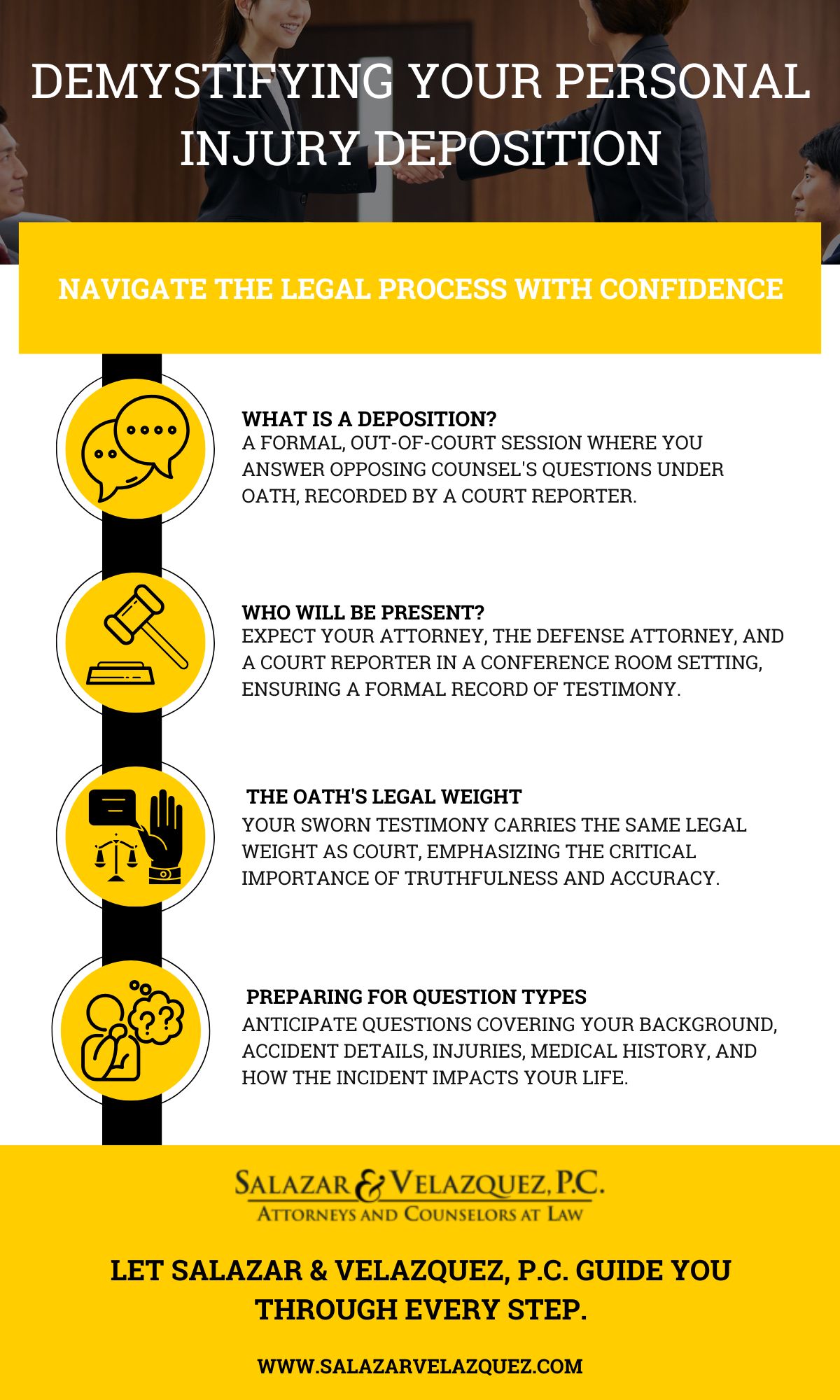
A deposition is a formal, out-of-court meeting where you (the deponent) answer questions from the opposing side’s attorney. This is part of the “discovery” phase of a lawsuit, where both sides gather information. The entire session is recorded word-for-word by a court reporter, who creates a written transcript. This testimony is given under oath, which means it has the same legal weight as testimony given in a courtroom.

Who Will Be in the Room?
The setting is usually a conference room, not a courtroom. You can expect a few key people to be present: you, your own personal injury attorney, the defense attorney (or attorneys) who will be asking the questions, and the court reporter. In some cases, a videographer may also be present to record the deposition on video, or other parties to the lawsuit might attend.

The Importance of Taking an Oath
At the beginning of the deposition, the court reporter will ask you to raise your right hand and take an oath to tell the truth. This oath is the same one you would take in court. It is critically important to be truthful and accurate. The transcript created from your testimony can be used by the defense attorney at a later hearing or during trial to ensure your story remains consistent.

What Kinds of Questions Will Be Asked?
The defense attorney has the right to ask a wide range of questions related to your case. These questions typically fall into a few main categories: your general background, your version of how the accident happened, the specific injuries you sustained, your medical treatment history (both before and after the accident), and how your injuries have impacted your daily life, work, and activities.
The Role of Your Attorney During the Deposition
Your attorney is present to protect your interests. While we cannot answer questions for you, we are there to ensure the defense attorney’s questions are fair and appropriate. If a question is improper (for example, if it asks for privileged information), we will make a formal “objection” for the record. We also help you prepare extensively before the deposition, so you feel ready and confident.
Key Strategies for Giving Testimony
Our best advice for clients is often the simplest: listen very carefully to the question. Pause and think before you answer to make sure you understand what is being asked. Only answer the question that is asked; do not volunteer extra information. If you do not know the answer, it is perfectly acceptable to say, “I don’t know.” If you do not remember, say, “I don’t remember.”
A deposition is a significant milestone in your personal injury case, and you do not have to go through it alone. Proper preparation with an experienced legal team can make all the difference. The attorneys at Salazar & Velazquez, P.C. are committed to guiding our clients through every single step of the legal process, including discovery and depositions. If you are looking for a law firm in Houston to help with your personal injury claim, contact us for a consultation to discuss your case.