
The moments after an accident in Houston can be chaotic and overwhelming. In that confusion, it’s easy to make simple mistakes that may significantly impact your ability to recover fair compensation. At Salazar & Velazquez, P.C., we have seen how these common pitfalls can complicate a personal injury claim. We want our clients to be informed, which is why we’ve outlined six common mistakes to avoid.

Admitting Fault at the Scene
In the stressful moments after a collision, it’s a common impulse to apologize, but saying “I’m sorry” or “it was my fault” can be interpreted as an admission of guilt. It’s important to remember that you may not have all the facts about the incident. Stick to a factual, objective account of what happened when speaking with law enforcement, and avoid speculative statements. This helps protect your position as the facts of the case are fully investigated.

Delaying or Refusing Medical Attention
We find that one of the most significant pitfalls is waiting too long to seek a medical evaluation. Even if you feel fine, some serious injuries, like whiplash or internal trauma, may not present symptoms for days. An insurance adjuster may later argue that your delay proves you weren’t truly injured in the accident. Creating a medical record immediately is a crucial step in linking your injuries directly to the incident, which is vital for any future personal injury claim.

Giving a Recorded Statement to the Other Insurer
The at-fault party’s insurance adjuster will likely contact you quickly, often seeking a recorded statement. While they may sound friendly, their goal is to protect their company’s interests, not yours. These adjusters are trained to ask questions that may be worded to elicit responses that can be used to minimize or deny your claim. It is generally advisable to politely decline to provide a recorded statement until you have had the opportunity to consult with a personal injury attorney.

Posting About the Accident on Social Media
In today’s digital age, what you share online can have a significant impact on your case. We strongly advise clients to refrain from posting any details about their accident, their injuries, or their recovery on social media platforms. Insurance companies and opposing counsel often search these profiles for evidence. A photo of you at a social gathering, or a comment that seems innocent, could be taken out of context to argue that your injuries are not as severe as you claim.
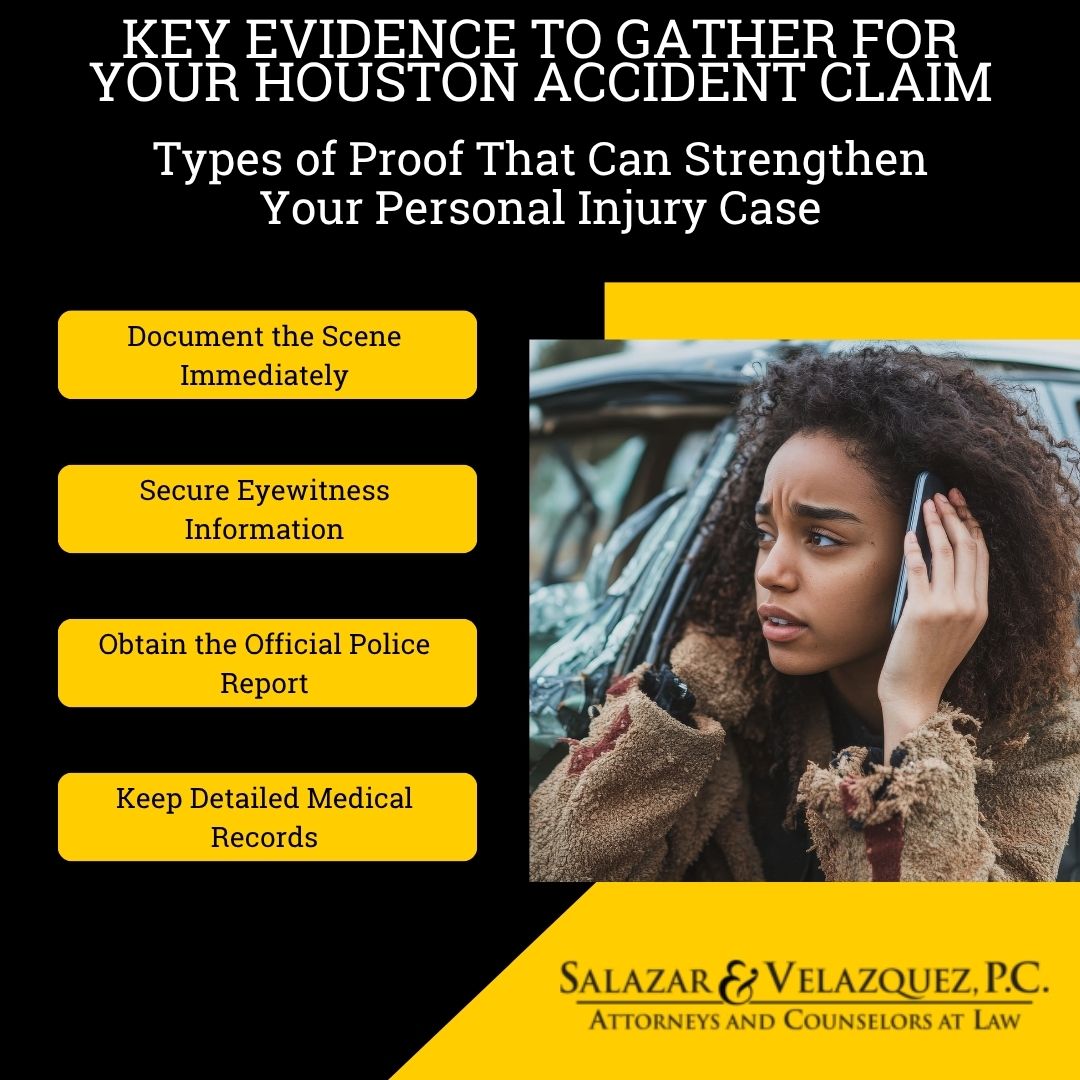
Failing to Document the Scene
Evidence can disappear quickly. If you are physically able, it is crucial to document as much as possible at the scene. This includes taking photographs of all vehicles involved, property damage, skid marks, traffic signals, and any visible injuries. It is also important to get the contact information of any witnesses and ensure a police report is filed. This initial evidence can be foundational for a personal injury attorney in Houston when reconstructing the events and establishing liability.
Accepting the First Settlement Offer
Insurance companies often try to settle claims quickly and for the lowest amount possible. They may present an initial offer that seems substantial but may not cover the full extent of your long-term medical bills, lost wages, and pain and suffering. It’s difficult to know the true value of your claim in the immediate aftermath. Accepting a quick settlement is final; you cannot ask for more money later, even if your injuries worsen.
Navigating the aftermath of an accident is complex, and these mistakes can be costly. Understanding what not to do is as important as knowing what to do. If you’ve been injured in Houston, protecting your rights is paramount. Our team at Salazar & Velazquez, P.C. is here to guide you through the complexities of personal injury law. We invite you to contact our law firm for a free consultation to discuss your case and learn more about your options.