
The aftermath of a car accident extends beyond physical injuries and property damage. The psychological and emotional impact can be just as debilitating, affecting your well-being long after the incident. In personal injury law, this type of harm is often referred to as “emotional distress.” Understanding how this concept is handled in a legal claim can be complex. At Salazar & Velazquez, P.C., we believe it’s important for individuals to be informed about all potential aspects of their recovery, including the non-physical damages that can result from a traumatic event.

Defining Emotional Distress in a Legal Context
In a personal injury claim, emotional distress generally refers to the non-physical, psychological impact of an injury-causing event. It is a form of non-economic damage, meaning it doesn’t have a specific, itemized bill like a medical expense. Instead, it encompasses a range of mental and emotional suffering, such as fear, anxiety, and sleep disturbances, that a person may experience. Because it is subjective, demonstrating the existence and extent of emotional distress often requires careful documentation and a clear connection to the accident itself.

Common Examples of Emotional Distress
The emotional toll of a car accident can manifest in many ways. Some individuals may develop anxiety about driving or even being a passenger in a vehicle. Others might experience recurring nightmares, flashbacks to the event, or symptoms associated with Post-Traumatic Stress Disorder (PTSD). Depression, humiliation, and a general loss of enjoyment in daily life are also potential forms of emotional suffering. Recognizing these symptoms is often the first step in addressing the full impact of an accident on your overall health.

The Challenge of Substantiating an Emotional Distress Claim
Unlike a broken bone or a hospital bill, emotional distress is an “invisible” injury, which can make it more challenging to prove. A claim for emotional distress often requires more than simply stating that you have suffered. The legal process typically requires evidence to substantiate the claim’s validity and severity. Insurance companies and courts may look for tangible proof that demonstrates how the emotional trauma has negatively affected your life, making detailed evidence a key component of the claim.

The Role of Documentation and Expert Testimony
To effectively demonstrate emotional distress, comprehensive documentation is often crucial. This may include records from mental health professionals, such as therapists, psychologists, or psychiatrists, who can diagnose conditions like PTSD or anxiety disorders. Personal journals detailing your feelings, symptoms, and the impact on your daily routines can also serve as supporting evidence. In some cases, testimony from mental health experts, as well as friends and family who can speak to the changes they’ve observed in you, may be utilized.
Negligent vs. Intentional Infliction of Emotional Distress
In Texas, claims for emotional distress can fall into different categories. Many personal injury cases that arise from car accidents involve a claim for “negligent infliction of emotional distress,” where the distress is a direct result of a physical injury caused by someone else’s carelessness. In rarer cases, there is “intentional infliction of emotional distress,” which involves extreme and outrageous conduct done with the intent to cause severe emotional turmoil. Understanding these distinctions is part of navigating the legal framework of your case.
How This Factors into Your Overall Personal Injury Claim
A claim for emotional distress is typically included as a component of the overall damages sought in a personal injury lawsuit, rather than being a standalone claim. It is considered alongside other non-economic damages like pain and suffering. The goal is to seek recovery for the total impact the accident has had on your life—physically, financially, and emotionally. The potential value assigned to emotional distress is highly case-specific and depends on the severity of the trauma and the strength of the supporting evidence.
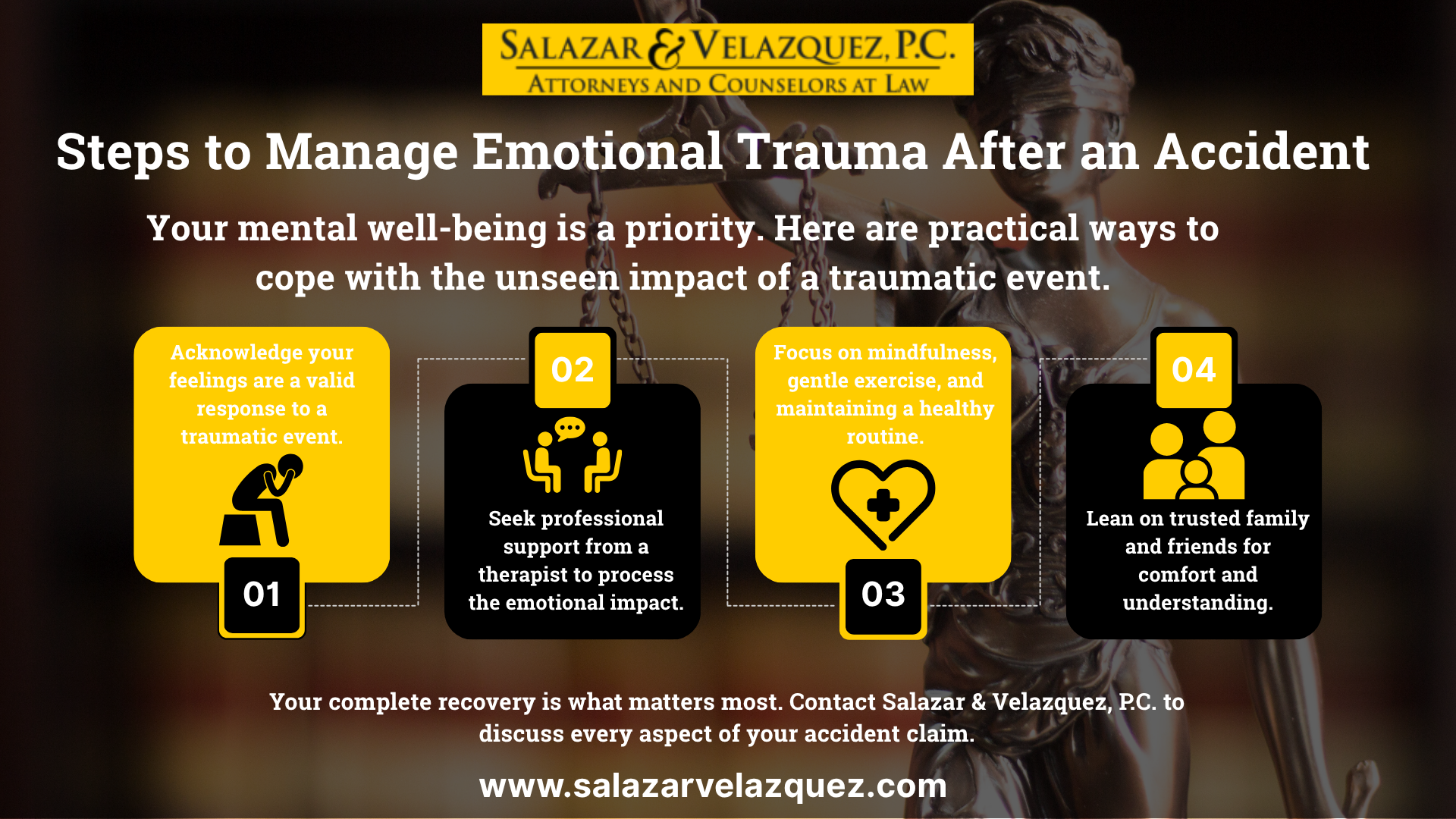
The psychological impact of a car accident is a significant part of the harm an individual endures. While pursuing a claim for emotional distress can be a complex process, it is a valid consideration in personal injury law. Documenting the effects and seeking professional help are important steps. At Salazar & Velazquez, P.C., we understand the sensitive nature of these damages. Discussing your experience with a qualified legal professional can provide clarity on how these matters may be approached in your specific circumstances.