
In the aftermath of an auto accident in Texas, one crucial piece of evidence that can greatly impact the outcome of a personal injury case is the police report. This document, prepared by law enforcement officers who respond to the accident scene, serves as an objective record of what transpired. Understanding the role of police reports and their significance in Texas auto accident cases is essential for both accident victims and their legal representatives. Here, our team at Salazar & Velazquez, P.C. will delve into the importance of police reports and how they can affect the outcome of your personal injury claim.

Collecting Accurate and Objective Information
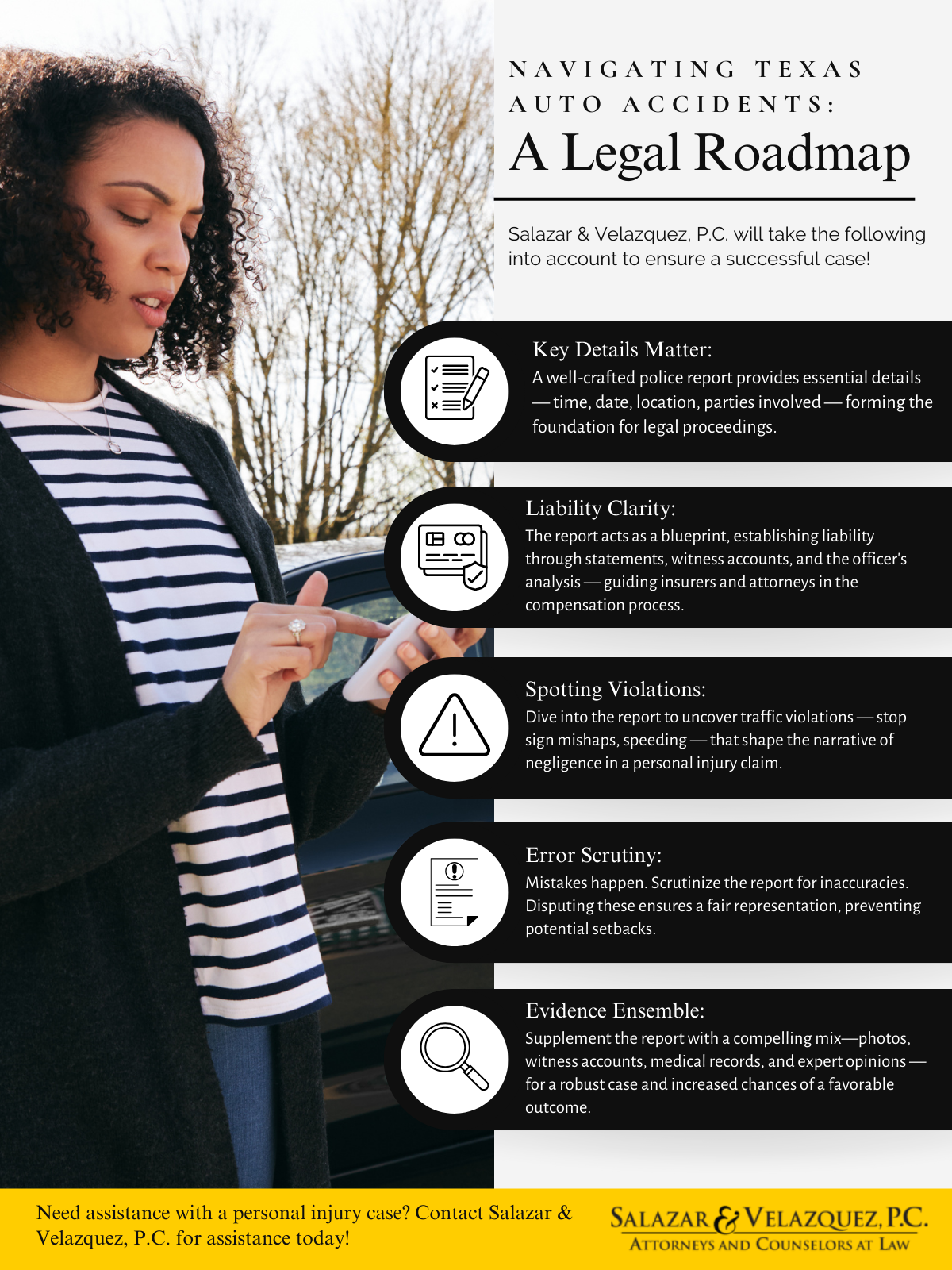
A police report provides crucial details about the accident, including the date, time, location, parties involved, and witnesses. The accuracy and objectiveness of this information can significantly impact insurance claims and legal proceedings. Insurance companies and courts often rely on the information documented in the police report to determine liability and the extent of damages. Therefore, it is important to ensure that the police report accurately reflects the facts of the accident.

Establishing Liability
One of the primary purposes of a police report is to establish liability in an auto accident. The report includes statements from the involved parties, as well as any witnesses. The officer’s observations and analysis of the accident scene are also included. This information helps insurance adjusters and attorneys determine who was at fault for the accident and, consequently, who is responsible for compensating the injured party.

Identifying Traffic Violations and Contributing Factors
Police reports often include information regarding any traffic violations or contributing factors that may have led to the accident. This can be crucial in determining negligence and liability. For example, if the police report indicates that one of the drivers ran a red light, this could be used as evidence of negligence in a personal injury claim. Identifying such violations and contributing factors strengthens the injured party’s case and could lead to a more favorable outcome.

Disputing Inaccurate Information
Although police reports strive for accuracy, mistakes, and inaccuracies can occur. For instance, the officer may miss or misinterpret certain details about the accident. In such cases, it is important for accident victims and their attorneys to review the police report thoroughly and identify any discrepancies. If there are inaccuracies, they can be raised with the investigating officer or addressed during the legal process to ensure a fair and accurate representation of the accident.

Supplementing Other Evidence
While the police report is an important piece of evidence, it is not the only factor considered in auto accident cases. It is crucial to gather additional evidence, such as photographs, witness statements, medical records, and expert opinions, to corroborate the information in the police report. This comprehensive collection of evidence strengthens the injured party’s case and provides a more complete picture of the accident and its consequences.

Consulting With an Experienced Personal Injury Attorney
Navigating the legal complexities of an auto accident case can be challenging, especially when it comes to the proper utilization of police reports. Consulting with an experienced personal injury attorney can make a significant difference in the outcome of your case. An attorney will thoroughly review the police report, identify any discrepancies, and utilize it in conjunction with other evidence to build a strong case on your behalf.
Seeking guidance from an experienced personal injury attorney is crucial for navigating the legal process and maximizing the chances of a successful outcome in your personal injury claim. Our team at Salazar & Velazquez, P.C. is here to be the help you need. Contact us for assistance today!
Contact Us