
Receiving a denial or a refusal to pay from an insurance company can be a deeply frustrating experience, especially when you are already managing the physical and emotional toll of an accident. At Salazar & Velazquez, P.C., we recognize that these roadblocks often appear when you are most vulnerable. As a law firm in Houston, our collective mission is to provide the professional clarity needed to address these setbacks. While a refusal might feel like the end of the road, it is often just a complex stage within the broader framework of personal injury law. Understanding the reasons behind a denial and knowing the appropriate professional steps to take may help in seeking a more favorable resolution for your situation.

Reviewing the Denial Letter for Specificity
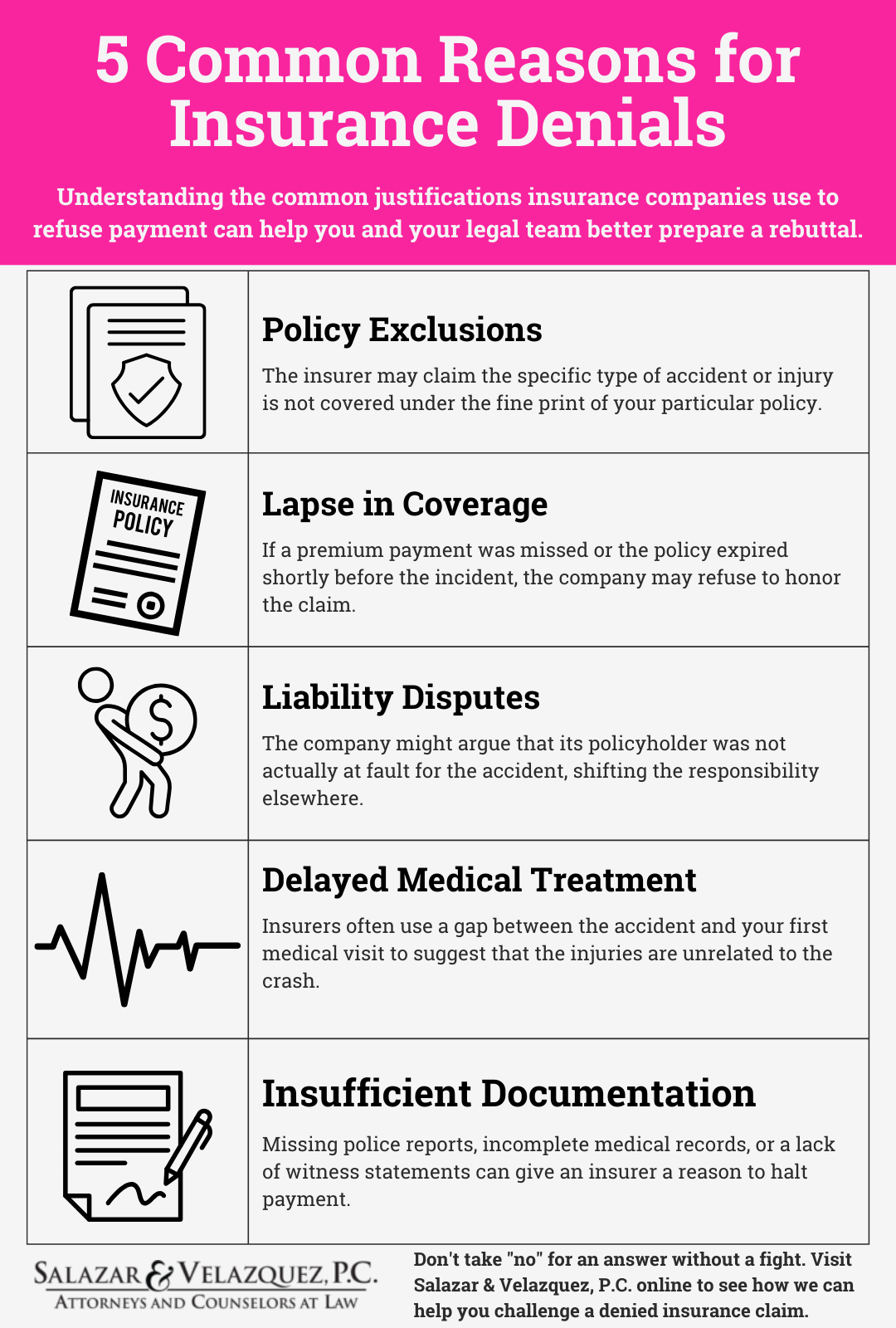
When an insurance company refuses to pay, they are generally required to provide a written explanation for their decision. We find it helpful to meticulously review this document to identify the specific policy exclusions or factual disputes cited. Understanding the “why” behind their refusal is a foundational step in determining how to move forward with a personal injury lawyer.

The Role of Supplemental Evidence in Challenging Denials
In some instances, a claim may be refused simply because the insurance company believes there is insufficient evidence to support it. We often assist our clients in gathering supplemental documentation, such as additional medical expert opinions or more detailed scene reconstructions. Presenting new, relevant information can sometimes lead an insurer to reconsider their initial position on the matter.

Understanding “Bad Faith” Insurance Practices
Under Texas law, insurance companies have a duty to act in good faith when processing claims. If a refusal to pay seems arbitrary or if the investigation was demonstrably inadequate, it may potentially fall under the umbrella of “bad faith.” While these cases are complex, a law firm in Houston can help evaluate whether an insurer’s conduct meets the legal criteria for such a claim.

Navigating the Internal Appeals Process
Most insurance providers have an internal mechanism for appealing a denied claim. This process often involves a review by a different adjuster or a dedicated appeals committee. We can provide guidance on how to structure these appeals professionally, ensuring that all legal arguments are presented clearly and that all procedural deadlines are strictly met.
Utilizing Mediation and Alternative Dispute Resolution
If direct negotiations and internal appeals do not yield results, mediation can be a useful tool. This involves a neutral third party who helps both sides reach a voluntary agreement. As a personal injury lawyer, we can represent your interests during these sessions, aiming to find a middle ground that respects the reality of your injuries and expenses without the need for immediate litigation.
The Importance of Legal Timelines and Statutes
It is vital to remain aware that the clock is ticking on your right to take legal action, regardless of where you are in the insurance negotiation process. In Texas, the statute of limitations for personal injury law cases is generally two years from the date of the incident. We help our clients keep track of these critical deadlines to ensure their right to seek a judicial remedy remains protected.
A refusal to pay is a significant hurdle, but it does not have to be the final word on your recovery. At Salazar & Velazquez, P.C., we are dedicated to helping our neighbors in the Houston area navigate these difficult administrative and legal challenges with professional persistence. Partnering with a law firm in Houston can provide the support necessary to challenge a denial and pursue the professional resolution you deserve.